5 intentional ways to cultivate yutori in your life

Instead of hurrying home after the school run I had another mission. At the top of my very long to-do list was a pilgrimage to visit the lilacs.

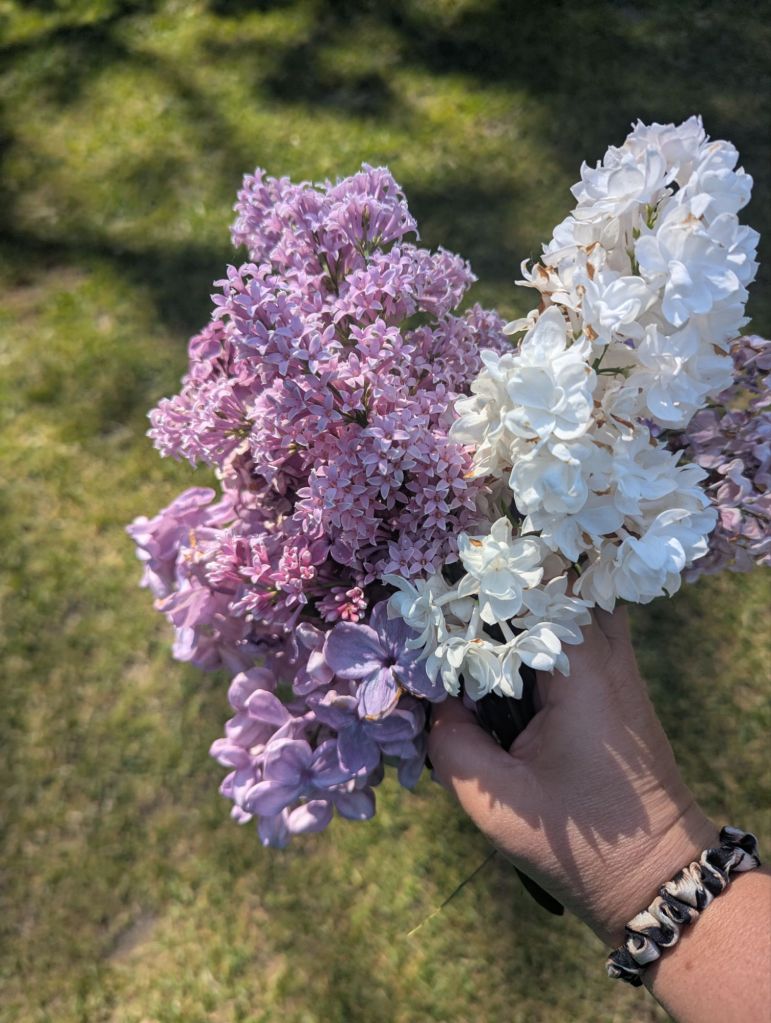
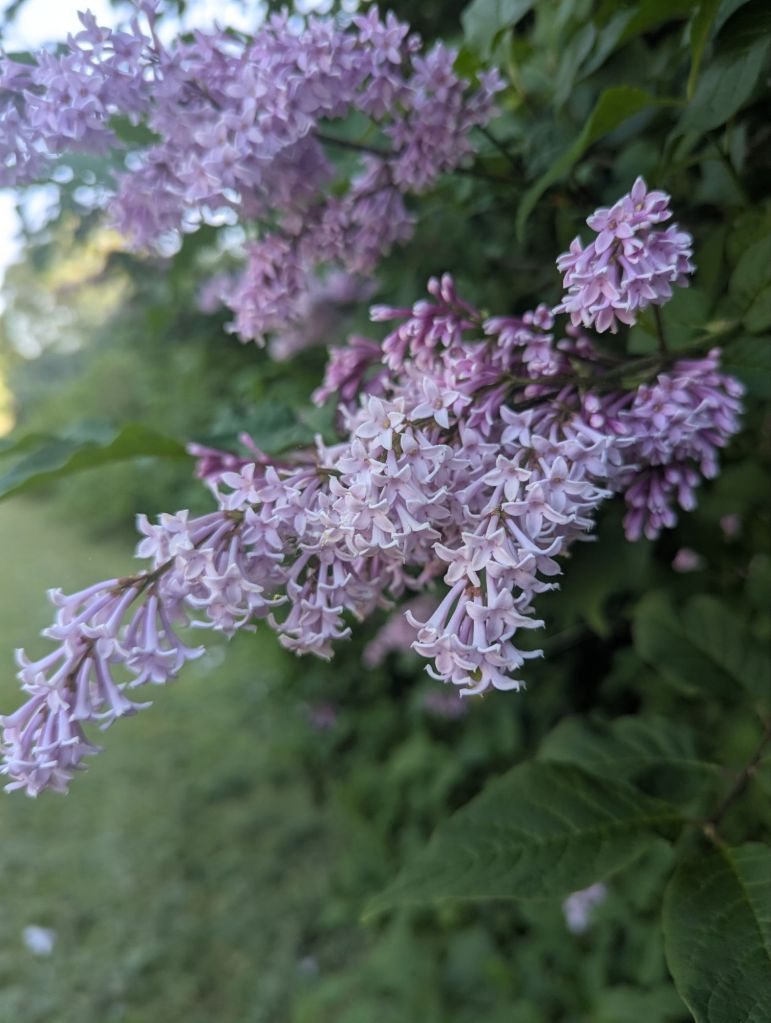
Withdean park houses the second largest collections of lilacs in the world with around 200 different varieties. Next to one of the main roads into Brighton & Hove, I had driven past the lilacs for years, never stopping. The park was largely empty except for dog walkers and me. The hum of the insects mingled with the distant sound of cars on the motorway. Spread in clusters at the edges of the cut grass lawn where lilac bushes. They had large cones of blooming petals in hues of white, violets, blues, magenta’s, pastel pinks, and even palest primrose. The smell was incredible: heady and syrupy sweet. 

The detour took a little over an hour and then I was back home working. Rather than taking anything away from my day I felt like I accomplished more. When I finished work, instead of feeling exhausted I felt replenished. This was one of my first attempts at consciously practicing the Japanese principle of yutori.

Yutori: the art of creating a spacious life

“Yutori (ゆとり) is a Japanese concept that translates to ‘spaciousness,’ ‘leeway,’ or ‘room to breathe’. It’s more than just physical space; it encompasses mental, emotional, and temporal room, encouraging a more balanced and less stressful way of living. Nihongo Master translates yutori as ‘elbowroom; leeway; room; reserve; margin; allowance; latitude; time’”

I am somebody who desperately needs more yutori in my life.

I do want to acknowledge that for some people yutori is easier to achieve than for others. I am aware that I have financial privilege and a relatively flexible schedule. There were times in my life: when I was working three jobs, when I had a newborn and a toddler, when my mother was seriously ill: where yutori would have been almost impossible. If this is the season you are currently in, extend yourself kindness. We do not all have the same 24 hours. Some of us are more able to make time available in our schedule than others.
Yutori: the antidote to toxic productivity

Yutori is a counterpoint to our culture of toxic productivity. This compulsion to be constantly achieving and busy does not stop at work but extends to our leisure time too. This can lead to shame around rest, an inability to switch off and in the end: burnout.

Oliver Burkeman’s amazing book Four Thousand Weeks: Time Management for Mortals talks about this existential dilemma better than I ever can.

“Productivity is a trap. Becoming more efficient just makes you more rushed, and trying to clear the decks simply makes them fill up again faster. Nobody in the history of humanity has ever achieved “work-life balance,” whatever that might be, and you certainly won’t get there by copying the “six things successful people do before 7:00 a.m.” The day will never arrive when you finally have everything under control—when the flood of emails has been contained; when your to-do lists have stopped getting longer; when you’re meeting all your obligations at work and in your home life; when nobody’s angry with you for missing a deadline or dropping the ball; and when the fully optimized person you’ve become can turn, at long last, to the things life is really supposed to be about. Let’s start by admitting defeat: none of this is ever going to happen. But you know what? That’s excellent news.”
― Oliver Burkeman, Four Thousand Weeks: Time Management for Mortals

All of which was all too familiar to me, somebody who had always valued myself on what I do rather than who I am. I was constantly rushing through life rather than experiencing it. I had become a human doing rather than a human being. And in this process, I had lost sight of what truly mattered. I was getting stuff done but missing the things in life which give it colour and meaning.

Often rushing behaviour is learnt in childhood. In Transactional Analysis, different aspects of our personality are called drivers. Drivers are early personality adaptations that help us get our needs met as children. One of mine is the Hurry up driver. People who have a Hurry up driver are constantly rushing and find it extremely difficult to stop. When we are in our driver, we tell ourselves – ‘I am okay because I am getting lots of things done’. Rushing performs a function, it stops our ability to feel or think clearly. Stuff may get done but often it is rushed and sloppy because we jump from task to task. People with this driver feel tired and unable to relax. 

To counteract this we must recognise that we are not machines built merely to produce, we are animals. And animals need rest, fuel and space in between tasks. Our to do list will always multiply, there will always be more to do than we could ever accomplish. In Oliver Burkeman’s great book Meditations on Mortality, he talks about how obsessive productivity is a way to mitigate our anxiety about death and our finite lives. The answer, isn’t to double down and do more but to accept this. To incorporate more yutori into my daily life, I came up with a plan.

5 ways I intentionally practise yutori

  1. Slow down. Because rushing has become a habitual behaviour, I will often notice I am speeding up when there is no need. I use taking a drink of water as a yutori ritual and a waypoint throughout my day to slow down. Every time I drink water, which I must do 10-15 times a day. I try to pause and feel the texture of the cold glass underneath my fingertips. To sense the taste and temperature of the water as it slips down my throat. By going slowly I am soothing my nervous system telling it: I am safe now. I can take my time. There is no need to rush.
  2. Build a buffer. Because I hated ‘wasting time’ when I had appointments I would often try to arrive exactly on time. But there would be traffic or it would take more time to leave the house than I expected. And I would be late which I found immensely stressful. Now I deliberately build in some cushion time. If I bump into a friend, I have time to chat. If I want to look at something I find interesting, I have time to do so. If the journey takes longer than expected, I have time for that. I want a schedule that has room to breathe.  
  3. Under commit. I have a tendency to over commit and over estimate my capacity. I often try to do too much with the kids because I don’t want them to feel deprived. But it is too much for my nervous system to handle and then I turn into shouty mummy. (And nobody likes shouty mummy.) Even when a day is filled with enjoyable tasks, if they are all crammed together it becomes not enjoyable. So I am getting into the habit of giving myself time to think before making any commitments. I will often sanity check events with my husband as he is more realistic and able to see what is actually achievable. I want to accept that I am human and can only do so much.
  4. Schedule joy. Listen as a Virgo and a perimenopausal woman, I love a to do list. If I don’t write it down, I won’t remember it and it won’t get done. But I began to notice that I was fulfilling my external obligations to others but not my internal obligations to myself. I needed to start scheduling joy. I have started writing down: walks, breath exercises, tiny but enjoyable side quests. Because yes filing my tax return is important. But so is taking my nine year old sea glass hunting. Buying new toilet rolls is just as essential as watching the murmurations of the starlings. I want a life that holds space for both.
  5. Be childlike again. One of my children is sloth-like in his speed and does not like to be rushed. Watching him eat is a geological process. Repeatedly I have to regulate myself and remind myself that although there are times I need to rush him (hai external agony that is the school run). Often I don’t, what does it matter if we take 20 minutes to walk to the shops because he was looking at bugs instead of 5. Instead of fighting to hurry him up, it is often more enjoyable to allow myself to drop to his speed. He is a great reminder that I can afford to take my time. What am I rushing for anyway?
I want to build a spacious life. Where there is time to take the scenic route. To go on enjoyable little side quests. To lie in the grass watching the cloud’s shifting shapes above me. Like Tolkien said, ‘not all who wander are lost.’

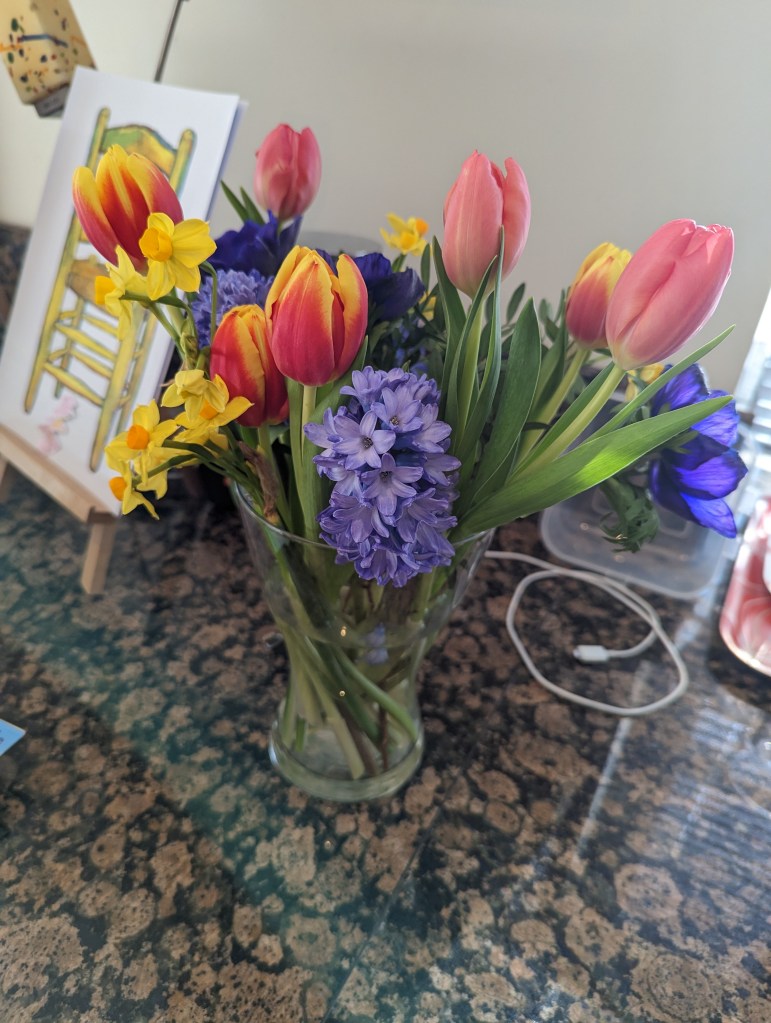
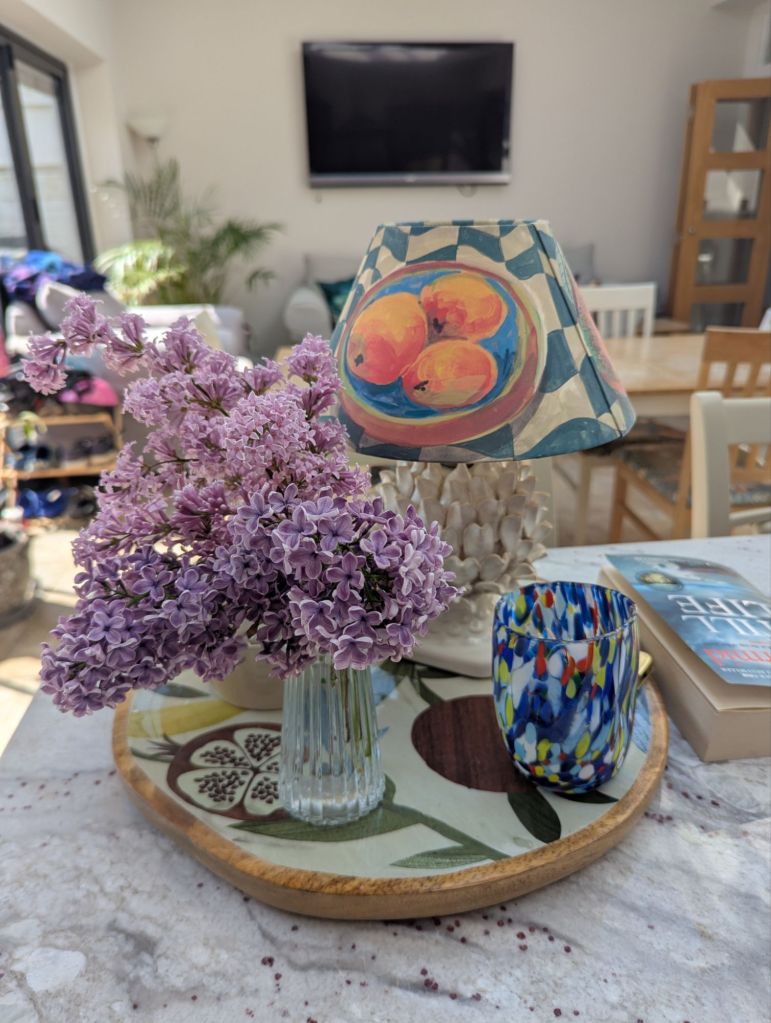
Yes, there will be times when I am too busy to spend an hour wandering through the park looking at lilacs. But today, in this moment, I have the time and I will take it. A vase of lilacs sits on my kitchen counter filling the room with their heady fragrance. A visual reminder to gift myself with yutori.

If you are based in Brighton & Hove area and interested in taking your own pilgrimage to visit the lilacs, Withdean Park is located here. The Friends of Withdean Park helpfully have a map of the lilacs and a trail you can do.

Have you heard of yutori before? Is it allowing yourself spaciousness and room to breathe something you would like to try in your own life?
Embracing life’s seasons: a personal mantra

I love a helpful personal mantra. Recently another one occurred to me. This is not the season.

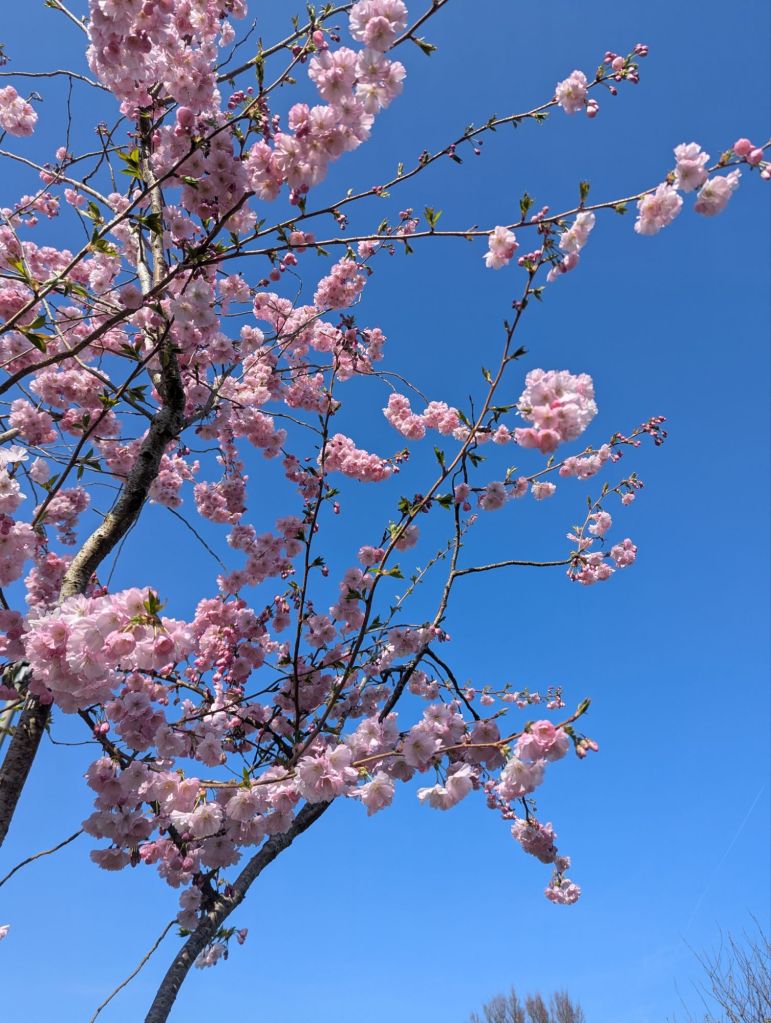
As every gardener knows, for everything there is a season. A season to sew. A season to harvest. And a season to let things be fallow.

Some context, my kids had to move school suddenly without warning. It’s been a huge amount of upheaval. A longer commute, a new environment and a lot of (understandable) big feelings at the change. I am close to my capacity in terms of what I can manage without tipping into overwhelm. For weeks, I have felt as if I am standing on my tiptoes, tilting my head back, the water lapping at my nostrils. I am just about keeping myself and my family afloat.

I went shopping this week. And I was reminded of a new pancake recipe I had wanted to make for my kids breakfast:

‘I really need to make those pancakes.’

And then a wise part of me spoke gently inside my head and said:

‘My love, this is not the season.’ And I felt myself exhale, let my shoulders drop and the relief wash over me.

So much unnecessary suffering would have been avoided in my life if I had just recognised this is not the season.

When you have a newborn, this is not the season to sign up for intense exercise classes. It is the season for rest and gently nurturing yourself.

When you are grieving, this is not the season for meeting new people. It is the season for hibernating and feeling your loss.

When you are in the depths of winter, this is not the season to embark on a new ambitious project. Yes, Julian calendar and new years resolutions I am looking at you! Far easier, to make changes when the days are lighter and warmer in spring.

We all go through thriving times when things are simpler. If life was a video game we would be playing it in easy mode. We have extra energy and motivation to get things done.

 But when we are in survival mode, we need to moderate our expectations of what it is possible to achieve. We need to move goalposts to make life easier for ourselves. As a recovering perfectionist this is so hard for me and so necessary.

I have kept myself in dysregulation in the past by asking too much of myself. I have not adapted my expectations to the context in which I find myself.

The reality is that I am in the verge of overwhelm season in my life. I don’t have a lot of spoons left. Yes, I would love to batch cook some healthy pancakes that I could freeze for my kids breakfasts. They would love that, I would love that. Yet, that would take energy away from doing other things that are important to me. I have limited energy reserves so I need to prioritise accordingly.

My kids get five nutritional meals at school. I have the energy at the moment to batch cook one meal. So I am expending it batch cooking a nutritional meal for me so I don’t survive on what I can forage from the service station. Trying to get myself to meal prep pancakes for their breakfast is like expecting dahlias to bloom in winter. This is not the season.

Part of the mantra that really helps me is the recognition that seasons change. Maybe in another couple of months, things may have shifted. I may have more energy

This is not the season contains an acceptance of where I am. It is a kindness to meet ourselves and others where we are now. Rather than where we desperately want to be. I would love to be in the season where I pre-make healthy nutritional snacks for my kids. 

But that is not the season of life I am in right now and that’s okay.

What season of life are you in? Are you adapting your expectations for yourself accordingly? Let me know in the comments, if this resonates.

Navigating grief and living loss at Christmas

A festive love letter to my mum

Editors note: I wrote this before Christmas but never hit publish because life. Today is my mum’s birthday. So it feels right, to honour her and the life lessons she taught me.

Often, you can’t see the space somebody takes up in your life, until they are gone. 

My mum is still alive but dementia has irreparably changed from the person she was. I feel the space my mother left most deeply at Christmas.

As a child I loved Christmas fiercely. I was lucky. Lucky in a way that you only know in hindsight. When something is shattered beyond repair and only then do you truly comprehend how beautiful it once was.

My family was complicated, and yet I never doubted that my parents loved us. 

The magic in Christmas came from having a mum that loved me. She bought the presents and wrapped them. She decorated the house. She booked the festive shows. My dad always bought the food and cooked an epic roast. But because of work schedules, the vast majority of the festive labour was done by my mum.

Only when my mum was gone did I realise the Christmas magic wasn’t an innate part of the festive season. It was generated by her invisible labour behind the scenes.

This was an act of quiet heroism. My mum made Christmas special despite her complicated feelings around this time of year. 

On the 21st of December 1982, my older sister Sarah was disabled in a hit and run. My parents spent Christmas in intensive care with Sarah. The doctors told them to say goodbye for she would not live to see the new year. Miraculously she survived, disabled but alive. But my parents were left alone to carry the burden of what had happened and mourn the unlived life Sarah could have had.

When I was younger I was oblivious to the significance of the date. But as I grew older, I could see as the dark lengthened and winter began to bite, my mum would coil tighter and tighter. Steeling herself against the memories flooding back.

I want to ask my mum how she made Christmas so lovely when her heart was breaking. As somebody who has my own traumaversaries now, my mum is one of the few who would be able to understand. I want to know how she navigated the day-to-day demands of parenting while holding her trauma.

I want to talk to her, as I was never able to, mother to mother about the invisible labour of women. How it feels to be glue holding the family together and what it costs you. But it’s too late to have that conversation. It will always be too late. 

I hope all of the tasks she did at Christmas were not just for us, her girls. I hope that some parts of her were able to find joy in the Christmas rituals. That it helped her to keep the darkness at bay.

For the past six years since my sister Lauren’s accident and my mum developed dementia. Christmas has been excruciating. Every year the sheer awfulness of Christmas shocks me again like being dunked into freezing water. Suddenly my family was smaller, hollowed out. Now it is just my dad, my older sister and me trying not to look at the spaces around us.

When friends would tell me they love this time of year. And, I would think, some of you have never experienced life-shattering trauma and it shows.

If I didn’t have children, I would book a holiday somewhere warm and tried to forget what day it was. But my kids and my husband love their cousins and their grandparents. They find true joy and magic in Christmas. So in a parallel to my mum 40 years earlier, I stay and try to make something beautiful out of the bleakness.

For the past couple of years frenetically I would try and feel the joy around Christmas. It was as if the complicated feelings I had around Christmas weren’t acceptable and I needed to change them. The harder I worked the worst I felt. I want to put my arms around past me who was feeling such deep grief and say it won’t always feel like this’.

This year has felt different. In part because of the deep work I have been doing in therapy around grief and living loss. I have come to a place of acceptance about what is. But also because I have given myself permission to do Christmas my way. I take part in the festivities I enjoy. I prioritise the bits of Christmas my children enjoy. And I sack off the rest. Goodbye forced cheer, hello radical acceptance of what is.

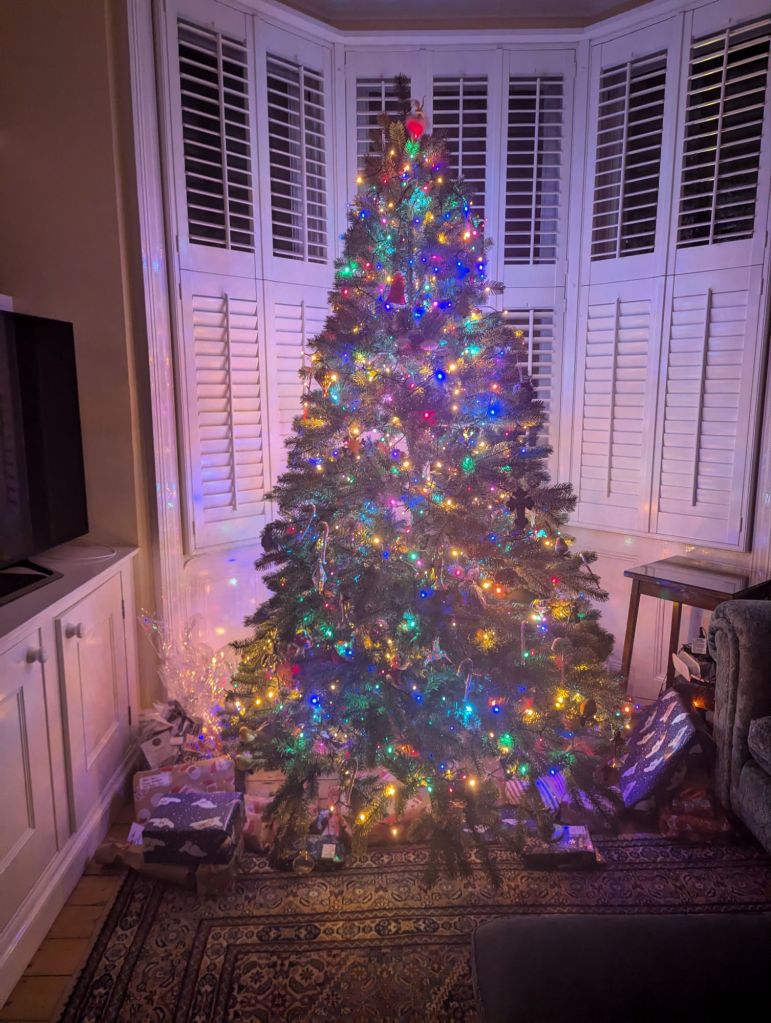
This year an unexpected gift of this new attitude is that I feel intensely connected to my mum at Christmas. To the long line of women who came before her. As I walk round the dark streets with my kids looking marvelling at all the lights, I see her. As I hang brightly coloured stars and baubles, I hear her. As I smuggle presents into the house thinking of my kids excited faces on Christmas day, I feel her.

I will never stop wishing that my mum was here, as she used to be. There will always be an empty space next to the fire where she should be watching her grandchildren open their presents. She is now too ill to leave the nursing home so on Christmas day we will visit her. This holiday will always remind me of who isn’t here and who is irreparably changed. It will always be bitter but there are moments of sweetness mixed in too.

And as I fill the stockings, I think about how I am in a quiet way honouring my mother. Who knew more than anyone how to light a candle in dark times. 

I am and I will always be her daughter.

Stupid girl

Growing up when I made silly mistakes my parents would call me stupid, an imbecile, or thick. Not on a daily basis, but enough.

And to be fair, often I was not being the wisest little spoon in the drawer. Leaving my passport at home, not once but two years in a row. Not my finest hour! Piercing my nose days before I left school which had a strict no facial piercings policy. Can you tell my frontal lobe had not fully developed yet?

Let me be clear, my parents loved me. They were, and are, good parents and good people. They were far harsher to themselves when they made mistakes than anything they ever said to us.

When I had children, I resolved that I would make different choices. (*Laughs in hindsight as I immediately made a lot of new and different mistakes that were distinctly my own*).

I had broken the cycle enough that I don’t use the s-word or call my kids names. Even when I really, really want to. (Yes, I am thinking about the curious incident of the willy trapped in the letterbox. No, I do not want to discuss it further.)

But in my head and sometimes out loud, I would call myself stupid. Not on a daily basis, but enough.

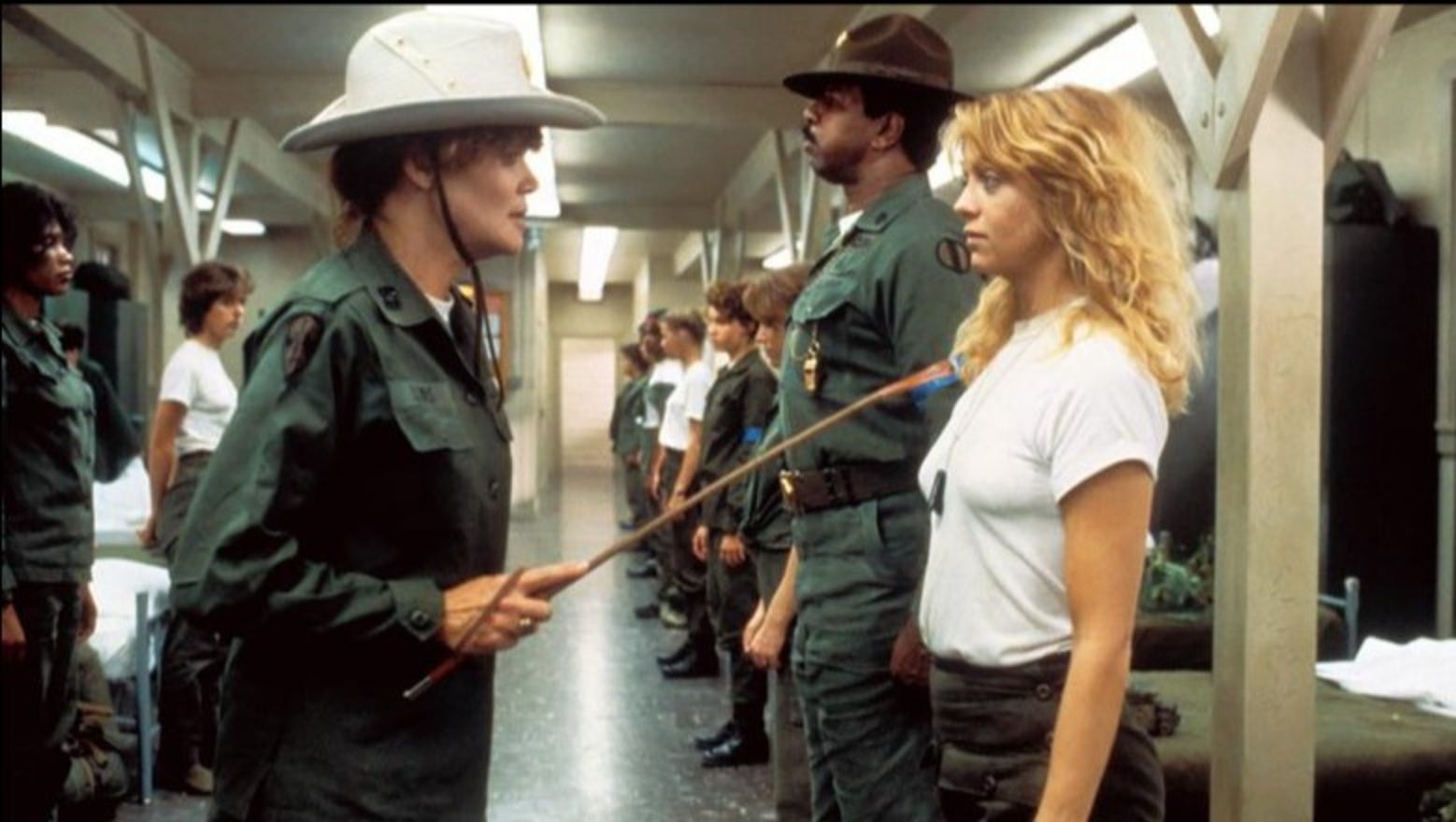
I’ve written before about my long-standing habit of talking to myself like a sergeant major addressing the greenest recruit. It was like I was being harsh as motivational tool. Occasionally, somebody would kindly point out that I was quite hard on myself. Then I would unkindly try and berate myself into being nicer to myself.

In recent years, my attitude towards myself has shifted. Thanks to copious amounts of trauma therapy, internal family systems work and neurofeedback. Instead of berating myself for being self critical, I shifted to a position of curiosity. I began to ask what purpose was this behaviour serving for me? The part of me that was overly harsh was trying in her misguided way to protect me. ‘You cannot be any harder on me than I am’, I was saying. I genuinely believed that for me to be accepted I had to be perfect and not make mistakes.

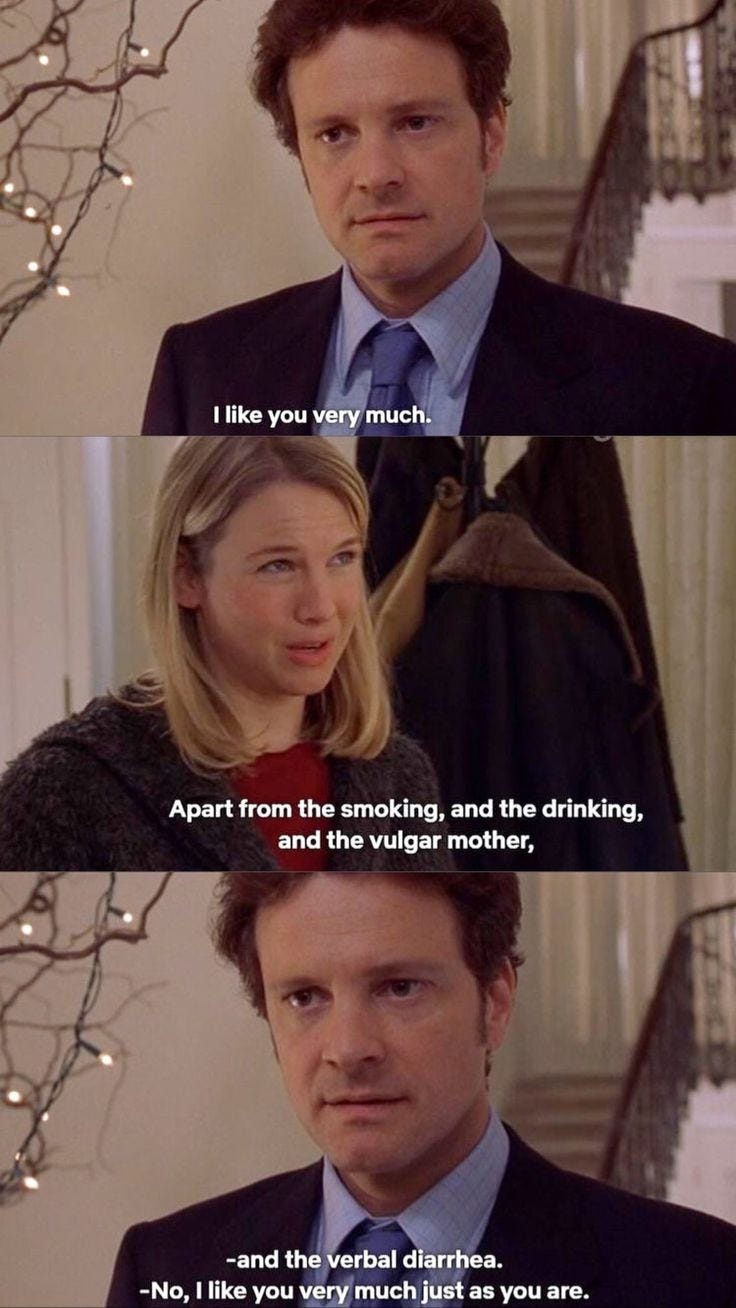
What made the biggest difference, was instead of trying to stop the unwanted behaviour. I first looked at the purpose it served (self protection). Then I began to implement healthier coping mechanisms that met the same need. What if, revolutionary thought, I could be acceptable just as I was, mistakes and all. Mind blown!

Think of a building covered in scaffolding where the scaffolding is our old coping mechanisms. We cannot just get rid of the scaffolding, even if it irritates us, even if we feel it’s no longer necessary. The scaffolding or old coping mechanism is performing a function. Instead we need to add in some supporting beams (healthier coping mechanisms) and over time the scaffolding (the old unwanted behaviour) is no longer needed.

Even though it took years I am proud to say that I am kinder to myself. I have more realistic expectations of what I can achieve. I recognise that I am a flawed human being who is mostly doing my best in often adverse conditions. But especially when we are stressed out our psyche is restored to factory settings and old defence mechanisms creep back in.

I may not have noticed that I was calling myself ‘s-word’ if it hadn’t been for that time I macerated my finger in the hand blender. 0/10 out of ten, do not recommend.

The first thing I did with my finger spraying blood everywhere was to call myself stupid. I said it to the nurses and doctors in the hospital. And then as I walked around with a bandaged finger for a month and everybody asked me how I’d injured myself, I called myself stupid, again and again.

I was so angry at myself. A moment of distraction had led to a month of pain, discomfort and endless visits to the doctors for wound reviews and antibiotics. I now had a gnarly scar, numbness, and it could have been much worse!

Because of the very visible bandage I had to retell the story whether I wanted to or not. So to hide my embarrassment, I would call myself stupid before anyone else had the chance to.

And so I might have continued obliviously, calling myself stupid if it wasn’t for my five year old. He was playing at the park while I chatted with a mum friend. She asked me about my finger and when I had finished rattling through the familiar routine. When my five year old laid his hand on my arm and said solemnly, ‘Mummy you mustn’t call yourself unkind names. You wouldn’t like it, if I called myself stupid.’

And I took a deep breath felled as I so often am by the wisdom of my children

He had been watching me and noticed that I was saying one thing to them and doing the opposite to myself. Our kids are mirrors and they pay far more attention to what we do, than to what we say.

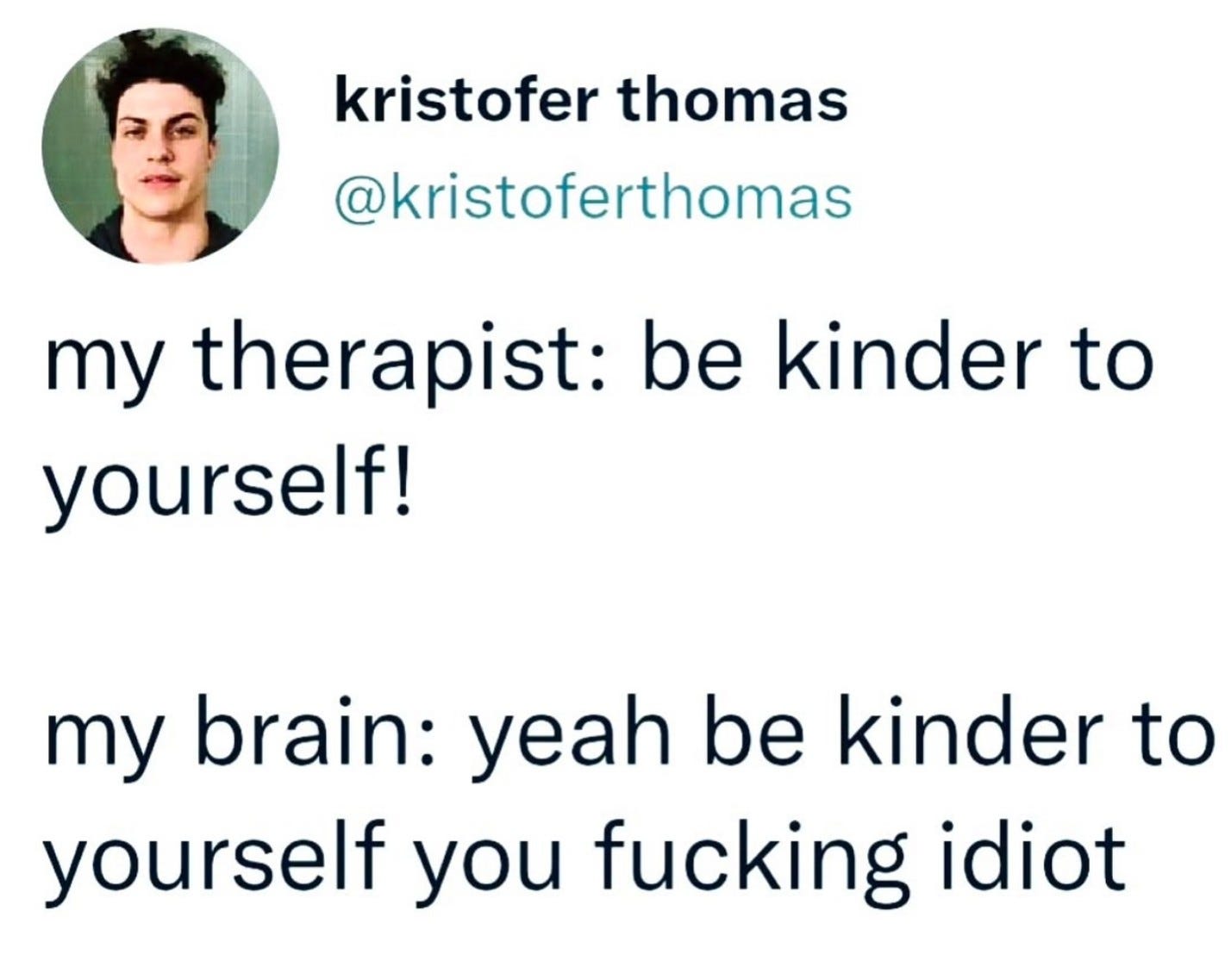
I have worked so hard in therapy to be kinder to myself but there are kernels of self hatred still buried deep within. Often as therapists we seen change as a spiral or peeling back the layers of an onion. We make a change and then months or sometimes years later, we spiral round again moving into a deeper layer.

So, I was reminded to talk to myself like I talk to my children. That I need to offer myself kindness especially when I feel like least deserve it. I do not have to earn kindness and compassion, it is how I treat myself. To offer myself acceptance even when I’ve made mistakes is to recognise I’m only human after all.

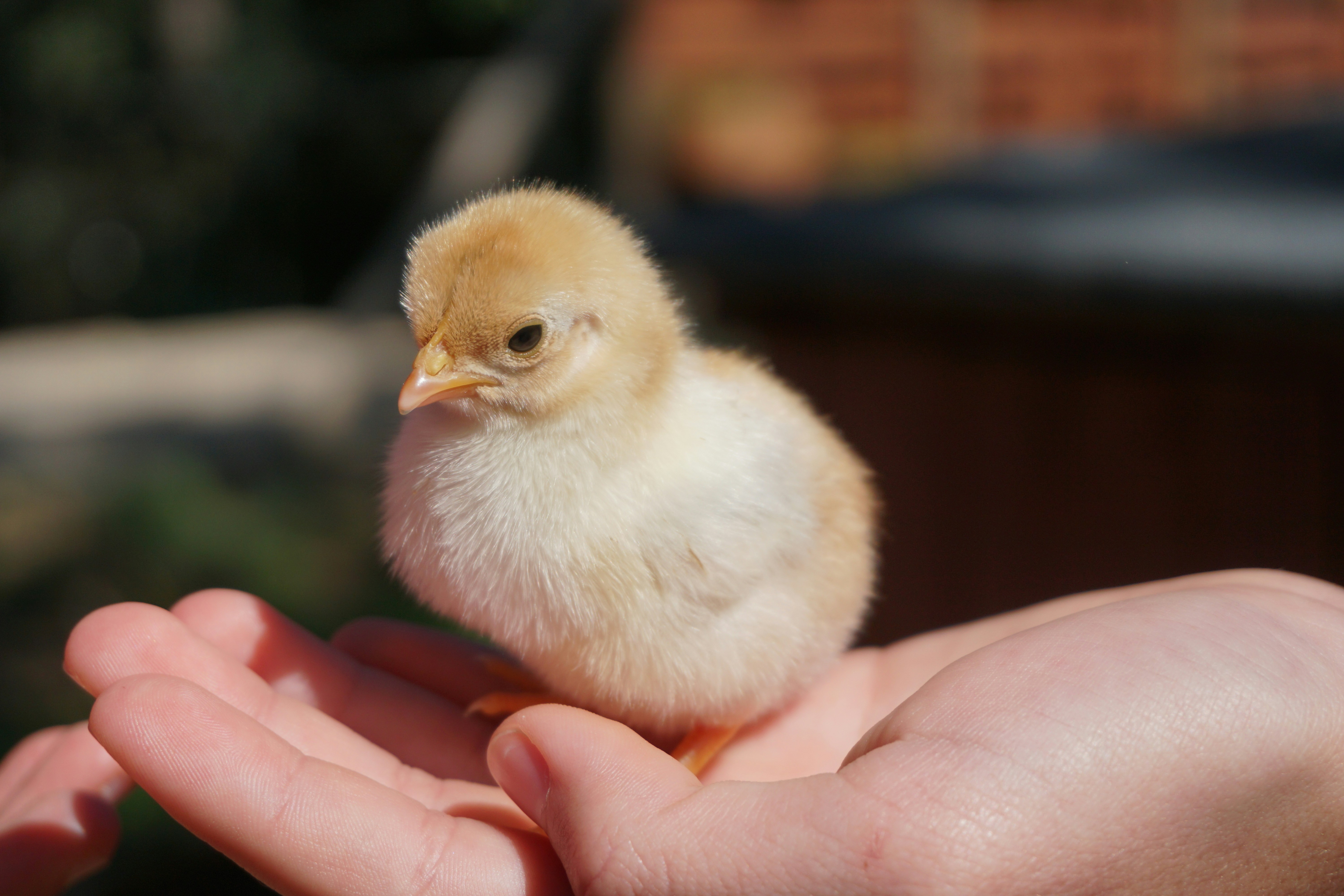
This reminds me how far I’ve come and that the work will always be ongoing. Do you also struggle to be kind with yourself? Sending you love, if this resonates. Let’s hold ourselves as gently as we would cradle a baby chick in our hands. Let’s walk into the world today being ludicrously kind to others and ourselves.

Prioritise joy: how to find happiness in the everyday

Sometimes life slaps me in the face with the reminder I need to prioritise joy.

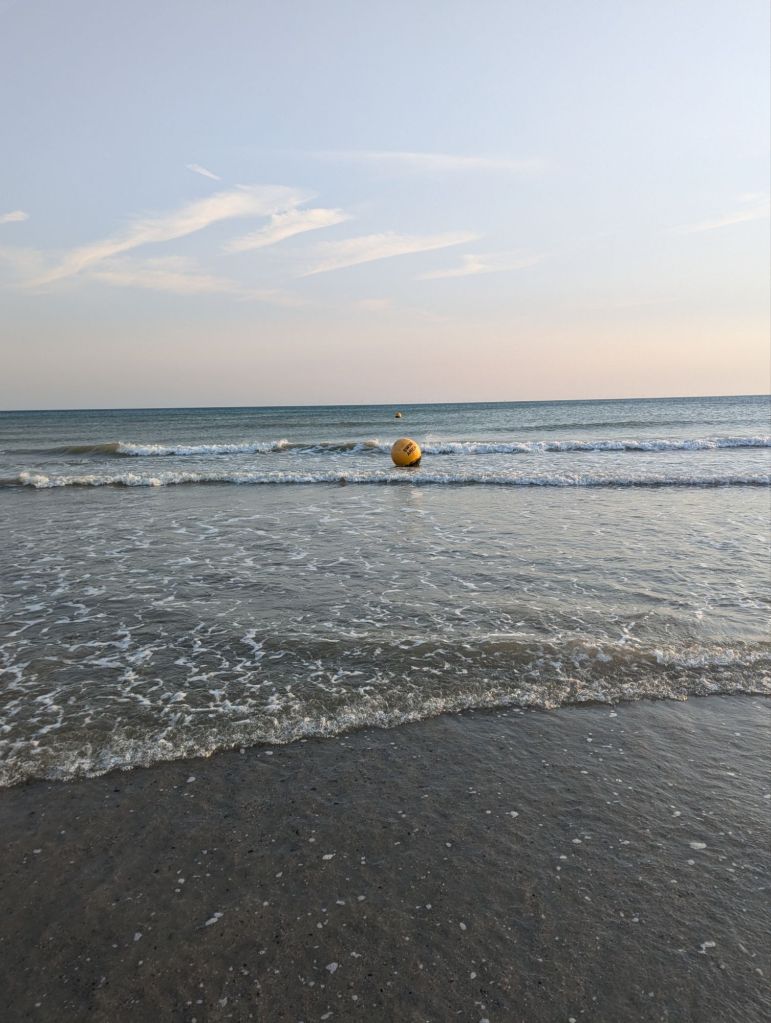
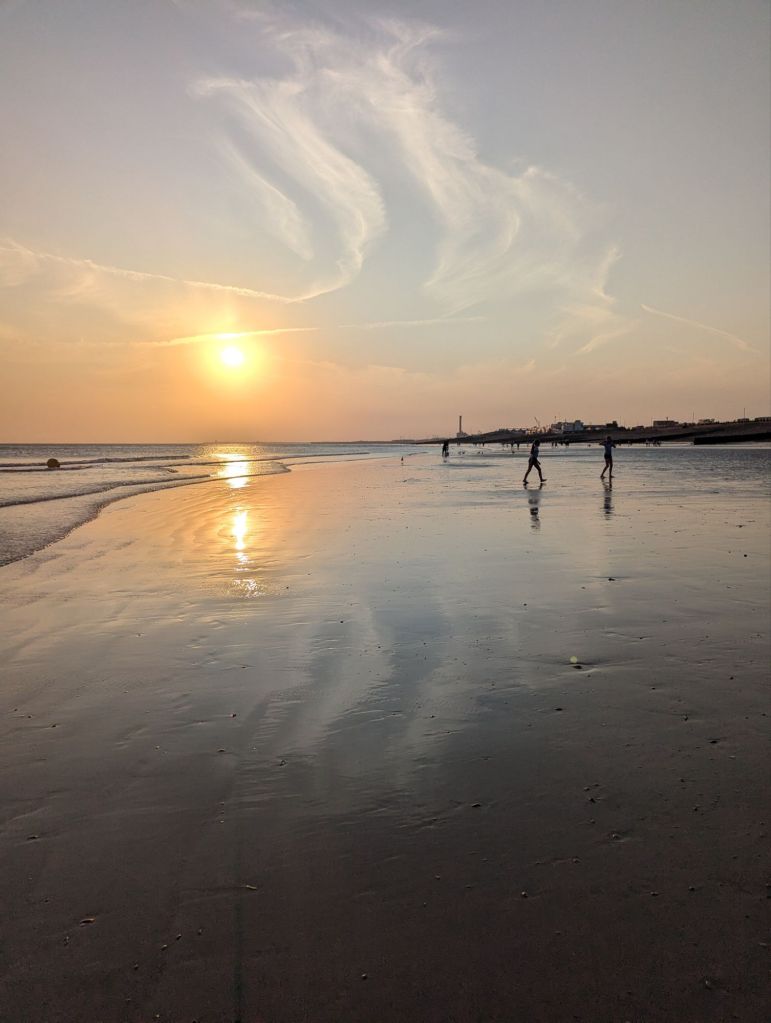
Twice a year, Brighton is blessed with ultra low tides. At the edge of our shingle beach, for a couple of hours, a stretch of sand is revealed like a magic trick.

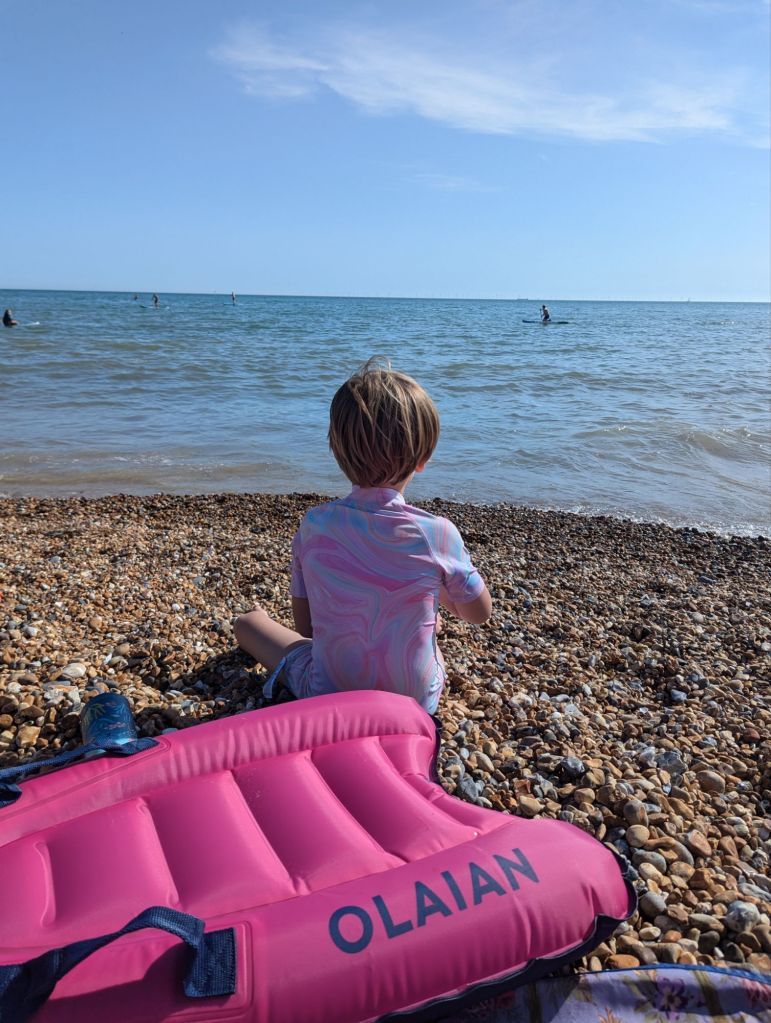
It’s my favourite time of year when I can walk to the swim buoys. 

I missed the first day of the low tides. There was a bitter wind and I was exhausted from ferrying my kids between school and swimming. There was so much nagging at my attention, it was easy to convince myself not to bother. 

The next morning I crept out of the house, while everyone was sleeping. My only company as I walked to the beach, the full moon drifting down the street after me. 

When I reached the promenade another world opened up: dog walkers, runners, fellow water lovers all crowded onto the newly revealed sand. People were smiling at each other, chatting to strangers in the collective joy at this unusually low tide.

These unusually low tides only last a couple of days. They happen twice a year in the autumn and the spring. This year, the combination of the equinox and the position of the moon has meant these are lowest tides we will see for ten years or more. 

Do I love these low tides because they are so rare? Would I appreciate them less if they were a monthly occurrence? Is that why I feel moved to tears when I realise this will be the last time I walk on this sand (anyone walks on this sand) for eight months?

Within minutes it will be hidden under the surf for another half a year.

For an hour, I am perfectly suspended in this moment. My feet blanching pink in the cold as I splash through the surf.

Treasures I rarely see are revealed. Hermit crabs scuttling along the sand. A starfish in the grooves of the wave-worn sand. An abundance of shells: cowrie, razors, screw, mussels, triton and scallops. And less romantically the rotten carcass of a fish the seagulls are pecking at.

I stole away before breakfast, and when I returned I was filled up by that experience. For four days, I went down with the kids, by myself, with neighbours – and I felt restored.

It is easy to let my life nibble away at me. To fulfil my obligations to others, to let the days pass in a blur. To stop seeking out experiences that pause time, that make me feel alive and fully in this moment. Here and now.

It was a caregiving summer. (It has been a caregiving heavy decade.)

My eldest sister stuck in hospital with a broken hip. My mother fading away in a care home. My youngest child acting up, needing more attention that I can give him. My eldest needing extra support with his additional learning needs. A friend’s child dealing with a serious medical condition. 

And me, not centred in my own life. Existing for what I do for others, a human support system. And not as independent person in my own right.

My nervous system was set like a clock in early childhood. I see danger everywhere, orienting myself to what is terrible in this world. It can stun me into a functional freeze, living my life as if I am in a constant state of emergency. Neglecting the tiny joys that make life worth living.

It takes such an effort for me to turn towards the sun. So I need to prescribe myself the antidote. I need to prioritise joy and schedule it in as if they are vital and essential. Because they are.

Everyday joys

For me, joy is found near the water: swimming, sea-glass hunting, snorkelling. It is writing in my journal, in blogs like these, in poetry hidden away on my harddrive. It’s travelling to places I’ve never been before, seeing new sights and soaking in new sounds. It’s quality time spent with the people I love. It’s living a life which has enough spaciousness to it that I can notice the world around me.

Let me be clear. This is not toxic positivity, gas-lighting myself or false consolation. This is holding awareness of both sides of life, the brutal and beautiful. Because of how my nervous system is finely attenuated to danger, I need to stack the deck with everyday moments of joy, peace and attend to what feels good.

I want to overdose on joy. Make myself replete with wonder. Overwhelm my awe circuits.

Because yes, sometimes this world is shocking, terrible and cruel. But equally it is also surprising, beautiful and full of grace – let me turn myself towards that.

What ways are you prioritising joy amongst the hustle and bustle of life? Share any ideas in the comments below.

The reality of buying our dream house

A year ago today, we received the keys for our new home.*

I’d been in tears the day of the exchange, certain the whole deal was about to fall apart. Our solicitor, consistently useless throughout, trumped himself by faxing important documents to the wrong number within the mortgage company and not checking whether they’d been received. 

(Heads up if you are in the Brighton area do not work with Neil Hayes of Taylor Rose, unless you want your property deal to crash and burn.)

Finally, we had the keys to our new house.

I remember feeling so nervous as we turned the keys in the door, that all I would feel was regret. 

House buying in England is such an odd process. You are spending the most money you will ever spend on something – that you’ve viewed twice for about 30 minutes in total.

You have to love the property enough to make an offer on it. Yet also hold it lightly, because until you complete the house purchase months later – it could all fall through.

We had been longing to move for years. Building a picture of what our dream house would look like. That over time got increasingly elaborate and fantastical. As we are both self employed it took years for our finances to be healthy enough to apply for a mortgage.

Which happened to be the week Liz Truss decided to crash the UK economy. Truly epic timing!

Options were limited. People weren’t putting their houses on the market unless they had to. We also wanted our house to be accessible for my younger sister who is in a wheelchair. Which in hilly historic Brighton & Hove ruled out a lot of properties with a narrow entrance or up flights of stairs.

The house was the sixth house we viewed. A white late Victorian house close to the sea. It had, to borrow from a poem I love, ‘good bones. This place could be beautiful right? You could make this place beautiful.

We put in an offer and finally after five months of surveys and contracts – it was ours.

After putting in the offer I had cold feet. What if I’d been wrong? What if this was a very expensive mistake? What if the first time we got the keys and I walked inside I felt like somebody had dumped ice cold water over me?

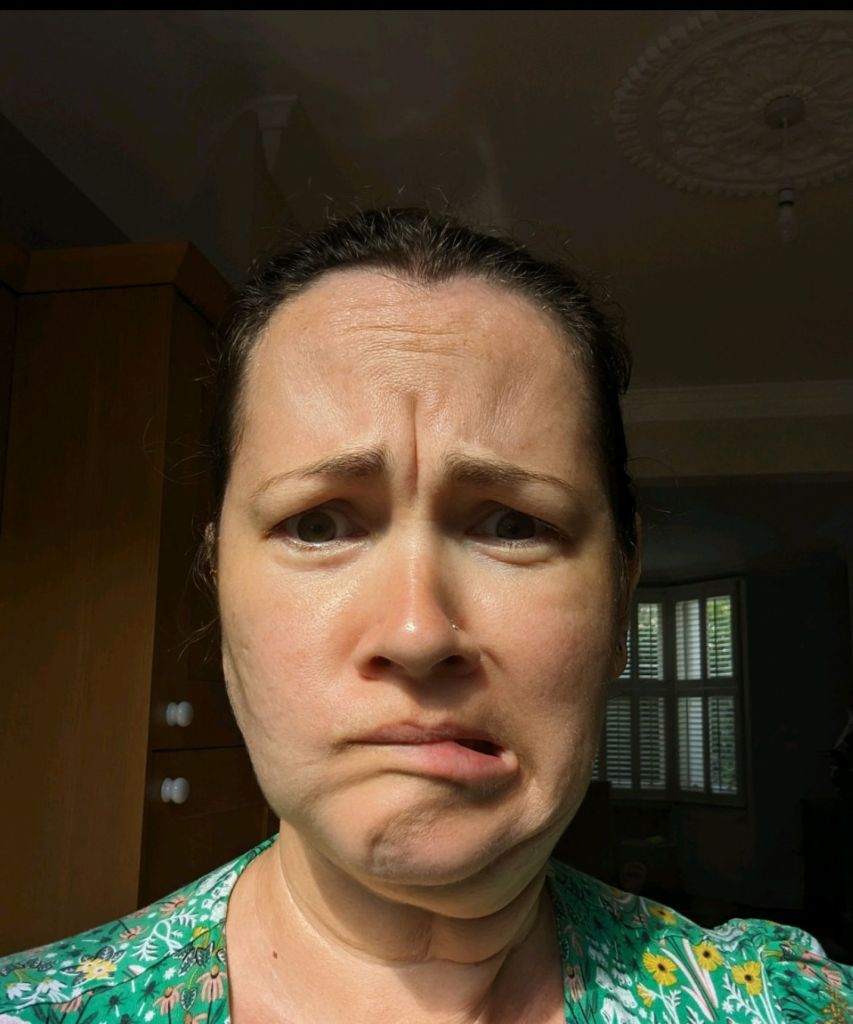
(This is actually my ‘I can’t find where I packed the kettle face’ not my ‘I regret buying this house face’.)

Sometimes love hits you like a bolt, instantaneous and life changing. It has rarely been like that for me. Other times, it’s a slow growing love that develops over time.

I love our house.

I love the way light floods through the stained glass front door in the evening.

I love to lie on the sofa in the kitchen diner staring up at the changing sky.

I love that the ground floor is accessible for when my sister comes to visit.

I love the wisteria over the back door and the surprise of seeing what springs up in the garden.

I love that when the wind blows in the right direction, the house fills with the brackish reek of the sea.

I love walking around my new neighbourhood and buying fruit and veg at the ridiculously overpriced green grocers.

Mostly I love that the sea is at the end of our road. That going for a swim is as easy as popping my costume on.

After years of renting, I knew I would feel different when we bought our own place. But what surprised me was how big of a difference this has made.

When you rent, there is always the possibility that the landlord will suddenly give you notice. You have little control over your environment, whether it’s as simple as the colour of the walls or as complex as fixing that damp problem.

If there is a continuum between safety and freedom, I am firmly at the safety end. HWSNBN unsurprisingly is the opposite. I like certainty. I thrive on routines. I hate surprises.

So it shouldn’t surprise me how different I feel now we own the house we live in. I feel more centred and deeply rooted. I like imagining how we will change our use of the space over time. I have planted climbing roses knowing I will be here long enough to see them. That this must be the place. That if I am lucky, this is the house my children will grow up in.

The existentialists always talk about choices. How when we chose one door, others swing closed. And there is something about entering mid-life that makes you realise in a very visceral way, that because you have chosen certain things other doors are closed for you now. Because I chose my husband, I closed off the other romantic possibilities that were open for me. I chose one career and that meant the time and opportunities to pursue other careers faded.

I chose this house and I am 99% happy with that choice. But there is the realisation that I am not going to raise my children in another country, or live communally, but here in this quiet street in this rainbow city by the sea. 

Moving into this house didn’t transform me into a magically different person. (Sadly). I am still somebody who can spend years dreaming about doing something, rather than picking up a paintbrush and doing it. 

I underestimated both my motivation for making changes (missing). 

My level of DIY skill (non-existent).

And also how much things actually cost (‘you don’t really need that second kidney- do you?’). 

There is stuff we need to do to the house (the roof). And stuff we want to do to the house (the attic), if we ever have enough money.

Just as with everything, there will probably always be niggly things that annoy me about the house. That in a perfect world I would fix with a snap of my fingers. But we don’t live in a perfect world.

The real test is this.

A month after moving we went on holiday. Driving back from the airport, up to the blue front door, the sea glistening at the end of the road – I felt so happy to return home.

*Footnote. 

We are so lucky and so privileged in this economic climate to buy a house. I do not ever take it for granted. And I really do not want this post to read as ‘there’s a fly in my champagne.’ 

I was and am so grateful that we were able to buy our own house. 

People had told me that it was stressful. And it was. 

People had told me it would be a dream come true. And it was.

And yet like most dreams made flesh, the reality was more complicated than I anticipated.

What I hadn’t heard other people talk about was the doubt as we questioned: ‘if we were making the right choice?’ Often when we talk about the big life changing decisions: it is with the benefit of hindsight. When we look back the path is clear and easy, whitewashed by hindsight.

But in my experience, the big life moments are often more ambivalent, confused and yes better in their beautiful complexity than I could ever imagine.

Has a big milestone hit differently than you imagined? Am I the only one to get cold feet in the process of buying a house? Let me know what your experience has been in the comments?

The magic of the mundane

I’ve noticed that when things go wrong, there is nothing I miss more than an ordinary day. Things that I took for granted and overlooked entirely suddenly with a shift of perspective become magical. 

Like many parents I find school and nursery drop off intensely stressful. Forcing shoes on unwilling feet, reminding my absent-minded eldest coat, bag, lunch for the 20th time, worrying that my littlest will cling like a limpet refusing to go in. I felt like I’d run a gauntlet before I even started work. 

Then covid hit and what had felt stressful and unpleasant suddenly seemed heavenly in comparison. I would long for that walk down the hill holding their hands, ‘Don’t run in the road. Look both ways. Stop licking your brother.’ And mostly I would long for the silence in the car afterwards.

It feels like when you fall ill, and suddenly look back at the ease of how you moved through the world in your healthy body. It is only in the after that we realise how much we took for granted before. 

Sometimes I notice it organically. It’s like time slows, I step sideways out of the busy current of life and I realise these are the days. As Vonnegut says for a moment ‘everything is beautiful and nothing hurts.’ The iridescent sheen of petrol in the gutter, the stark black silhouette of the bare branches against the sky, the joyful both arms open embrace my littlest greets me with. I am able to stop and exclaim, ‘If this isn’t nice I don’t know what is.’ These mundane magical moments. 

I am not talking about forcing gratitude when we are having an awful day. Gratitude cannot be imposed from other people or even from ourselves. ‘Be grateful for what you do have’ doesn’t help when we are having a hard time. We can’t gaslight ourselves out of feeling what we feel. No toxic positivity here, my loves.

But being able to notice when things are good, or even neutral is a capacity we can intentionally cultivate.

Our brains and nervous systems have a predisposition towards survival, this means that moments of discomfort or danger have a stickiness that good or neutral moments don’t. This makes sense. In evolutionary terms it’s better to mistake a stick for a snake than vice versa. But it means we consciously need to work harder to notice when things are pleasant or even neutral.

In Kimberley Anne Johnson’s brilliant book Call of the Wild she calls it anchoring in the blue. Anchoring in the blue is a practice where we can expand our capacity to feel pleasure and joy by soaking up those good moments. By giving them space to breathe and be taken in, rather than rushed by.

Three times I’ve done a gratitude practice called 100 happy days. You take a photo of something that brought you happiness and post it on social media. Every single time I did the challenge the pattern was the same. At the beginning I would struggle to find one thing, but by the end of the challenge I would be debating between a couple of different moments. I began to see patterns in the things that I was grateful for. That then led me to seek out more of these moments and to consciously scatter them throughout my week. These moments were almost always present – I just had to sharpen my gaze to notice them. 

My gratitude practice rules

Pause. 

Let that feeling of the magical mundane expand in my chest.

Take a photo.

Share once a week.

If for whatever reason I am finding it hard to see the magic in the mundane. Don’t force it. We all have days like that. There is always tomorrow.

I am feeling concerned about how social media is affecting my focus so I don’t want to share daily on there anymore. But I will commit to doing a weekly round up of magical mundane here.  

January week 2 – the magic of the mundane

A solo cup of tea and a swim after the first drop off of the year.

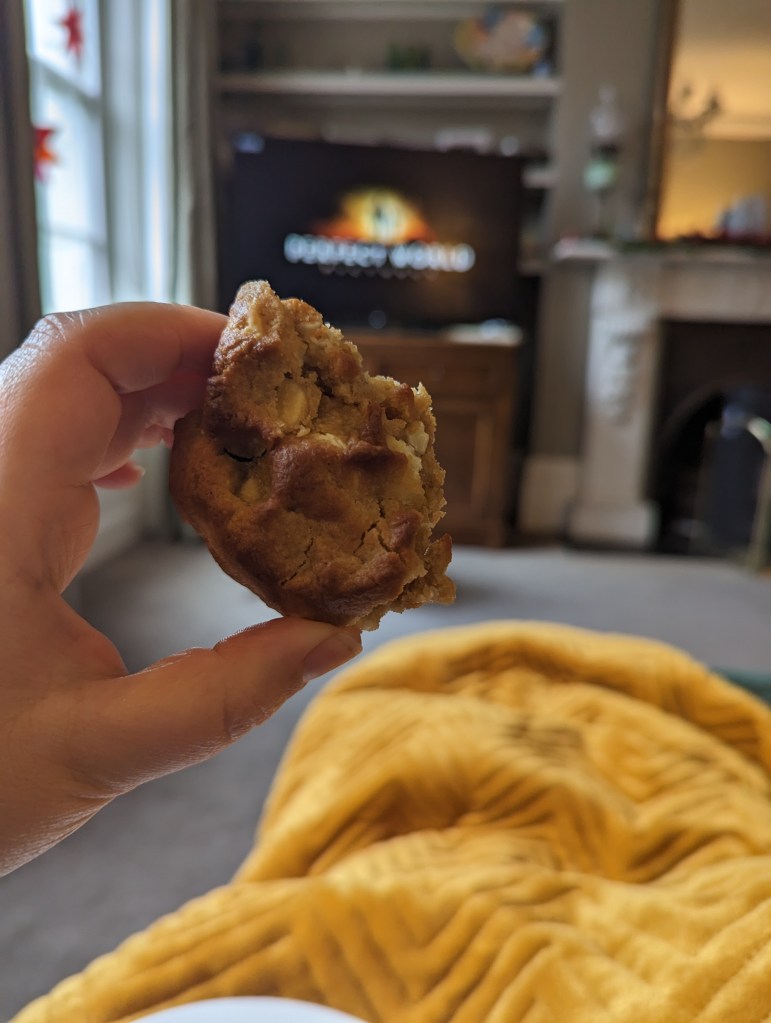
Eating warm white chocolate and miso cookies under my heated blanket – a game changer purchase.

Pastel houses 

Those winter sunrises 

The endless adjustments my littlest makes to his birthday balloons. Long strings. Short strings. No strings. 

The shadows my Waldorf stars cast on the walls.

A rare blue sky after weeks of rain.

After the covid years finally being able to host a birthday party for my littlest.

Pink seaweed I found on the beach. Forager friends, does anybody know what it’s called, or knows of a good seaweed identification book? (Hi, I’m middle aged.)

Where have you found the magic in the mundane this week? Any pics, I would love to see them. 

Read

This week I read How to Keep House while Drowning by KC Davis. It’s cleaning and organisational tips for people who are neurodiverse or have mental health issues. When my mental health is bad, I slowly turn into a human version of What-a-Mess, something I feel immense shame and guilt about. KC talks about how care tasks are morally neutral – gamechanger. There are lots of practical tips I’ve already started implementing from the 5 things cleaning methods to closing tasks. And if reading feels too much for you right now, she has a TED talk and she’s also on TikTok.

Watch

Crip Camp on Netflix is about the rise of the disability rights movement. It’s an era I know very little about. It is brilliant, angry and inspiring. Anything I can watch that reminds me that great Martin Luther King quote helps ‘the arc of the moral universe is long, but it bends toward justice’. 

Words Words Words

The Orange by Wendy Cope

At lunchtime I bought a huge orange –

The size of it made us all laugh.

I peeled it and shared it with Robert and Dave –

They got quarters and I got a half.

And that orange, it made me so happy,

As ordinary things often do

Just lately. The shopping. A walk in the park.

This is peace and contentment. It’s new.

The rest of the day was quite easy.

I did all the jobs on my list

And enjoyed them and had some time over.

I love you. I’m glad I exist.

I am no longer waiting

In my writing journal, I came across a poem titled ‘I am no longer waiting’. It felt like a message in a bottle from past me. 

I am excellent at waiting. For the perfect moment. For conditions to improve. And now I am waiting for my mother to die.

I love her, I don’t want her to die. But she has been slowly unravelling for years as dementia stole her sanity and now her ability to walk or use her arms. 

Death is not the enemy but a merciful friend.

I don’t know if you have ever watched somebody you love slowly deteriorate. I am sorry if you have. It is agony. The waiting for the inevitable feels endless. And yet amongst the deep waves of grief I have been surprised to find a strong counter current pulling me towards life. I am surrounded by death and yet I have never felt more alive.

The modern world has many benefits, but because we have become removed from death and tragedy. It allows us to persist in the grand delusion that death won’t happen to us. Whereas one of life’s great truths: is none of us are getting out of here alive. Death happens to us all. 

What do we do what that knowledge, that dark and precious gift? My mother’s final gift to me.

Someone I loved once gave me

a box full of darkness.

It took me years to understand

that this, too, was a gift.

‘The Uses of Sorrow’ by Mary Oliver

Today would have been my best friend Lianne’s birthday. She would have been 41. She was somebody who was vividly alive. Some of us go quickly, we don’t have a chance to say our goodbyes. For those of us who see death coming, it can be a chance to do things differently. Yet for Lianne as she became more ill, her ability to things she wanted to do was eaten away by the cancer.

I don’t want to wait until I am dying to regret the things I did not do. I do not know how much time I have but as the great New Jersey poet Jon Bon Jovi said ‘I just want to live while I’m alive.’

I love new years resolutions. The idea of turning over a new page, the seductive possibility of change appeals to me. I saw somebody posting on social media about new years resolutions to lose weight. It said what if instead of waiting to lose weight, you did all those things you think losing weight will give you now?

What if you wore the bikini anyway?

What if you went to the dance class anyway?

What if you went on that date anyway?

What if you stopped waiting and started living now?

So this year I am resolving to stop waiting and to start living. 

What that looks like for me.

Telling my children I love them. Kissing my husband. Dancing to anthems with my besties. Swimming in the sea. Staring up at the stars. Booking that art class. Wearing that unflattering rainbow t-shirt that I love. Writing as if my life depended on it.

It looks like being in this world and not standing on the sidelines waiting for the right moment to jump in. Because now is all there is.

It is paying attention to all the things I tell myself I cannot do.

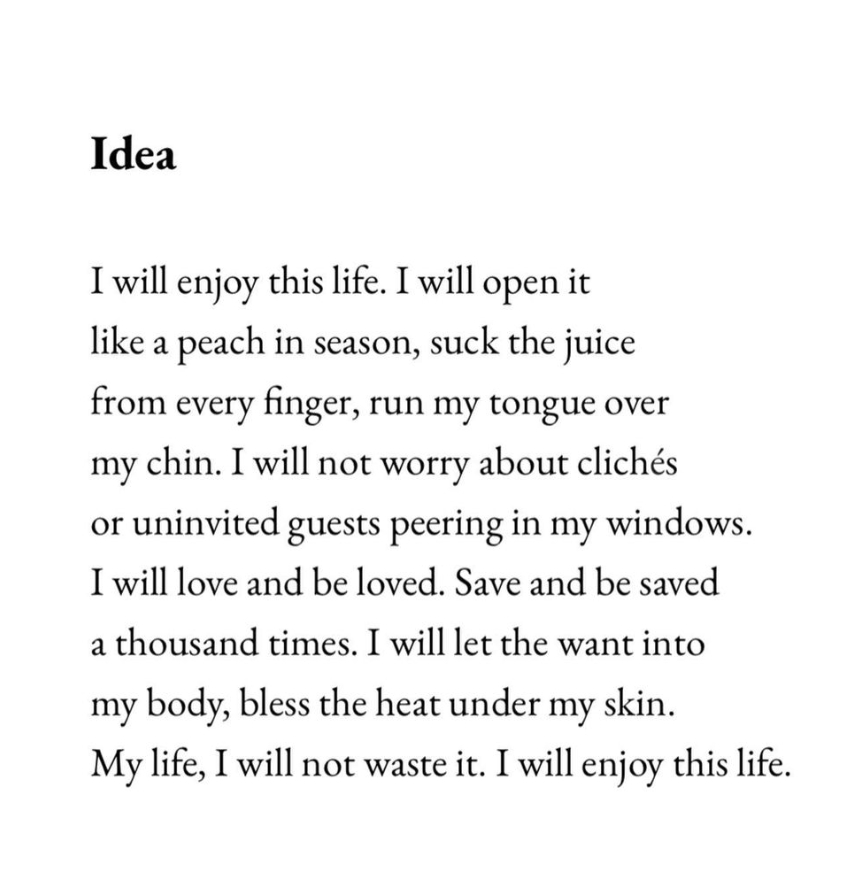
Idea by Kate Baer.

So let me ask you: what are you longer waiting for? What are you doing now? To paraphrase Mary Oliver how are living ‘your one wild and precious life?’

Words. Words. Words.

Advent of Midlife

by Mary Anne Perrone

I am no longer waiting for
A special occasion;
I burn the best candles on ordinary days.

I am no longer waiting for
The house to be clean;
I fill it with people who understand that
Even dust is sacred.

I am no longer waiting for
Everyone to understand me;
It’s just not their task.

I am no longer waiting for
The perfect children;
My children have their own names
That burn as brightly as any star.

I am no longer waiting for
The other shoe to drop;
It already did, and I survived.

I am no longer waiting for
The time to be right;
The time is always now.

I am no longer waiting for
The mate who will complete me;
I am grateful to be so
Warmly, tenderly held.

I am no longer waiting for
A quiet moment;
My heart can be stilled whenever it is called.

I am no longer waiting for
The world to be at peace;
I unclench my grasp and
Breathe peace in and out.

I am no longer waiting to
Do something great;
Being awake to carry my
Grain of sand is enough.

I am no longer waiting to
Be recognized;
I know that I dance in a holy circle.

I am no longer waiting for
Forgiveness.
I believe, I believe.

You

Dearest you,

I was on the other side of the world watching the cherry blossoms bloom when I began to feel odd. Sick and woozy, as if I’d eaten something bad. I almost passed out on packed tubes and in scorching onsens. I pushed the thought to the back of my mind that this felt very familiar and only mentioned it in a joking way to your father – I couldn’t bear to hope and be disappointed.

A week later, jet-lagged and home again, I took a pregnancy test and within seconds two pink lines blossomed. It was the first sign I had of you. Almost three years exactly from learning I was pregnant with your brother, I was pregnant with you.

It had been the longest winter. April is the cruellest month and it was then things finally snapped with a family member. The crisis team was called and there was talk of secure psychiatric units. Things were so bad I wasn’t sure if I should go to Japan at all. How could I go? I felt so ill with stress I was barely sleeping, on the verge of fragmenting myself. To survive I would need to dredge every bit of my energy and resources. How could I stay? 

So we went to Japan, your father, your brother, me and you – my little stowaway. And among the mountains and the cherry trees, I felt something in me emerge from hibernation that I thought was long dead – hope.

With your brother, I could think of nothing else. With you, there were long periods when I forgot about you. Not because you were any less wanted, but because I wanted you so much it hurt.

It was as if I couldn’t look at you directly. I worried if I did you’d disappear as if you were never there. You shimmered like a moonbeam at the corner of my eye so precious and yet so ephemeral.

It hasn’t been an easy pregnancy. I have sat heavily bleeding in the Early Pregnancy Unit (EPU) more times than I can count, convinced that you were gone. Only to see you moving in flickery black and white, busy with growing and utterly indifferent to my panic. My love for you has only grown in tandem with my fear of losing you. I’ve struggled through gestational diabetes, more recently high blood pressure and anxiety that has never quite left me. Externally this pregnancy has coincided with some of the most challenging events within my extended family. Much as I have tried to protect myself and by extension you from the stresses I cannot help but worry about how you will have been affected.  I have felt so anxious this pregnancy about losing you, I haven’t been able to shout as loudly as I would want about your presence. But step by step, day by day we have made it to 38 weeks and you are almost ready to enter the world.

I am so in awe and completely poleaxed by my love for you. I am so utterly terrified of the capriciousness of this world I am bringing you into.

You are moon-skulled with star-fish hands and your brother’s nose. Your favourite position is wedged securely under my ribs as close to my heart as you can get. You are never more active than when I am in the water, shifting from side to side like a tiny Kraken. The feeling as I wait to meet you is like every childhood Christmas rolled into one. Oh the anticipation as if my body can barely contain it. I cannot wait to see your face, to hold your tiny hands, to feel the soft susurration of your breath.  Until then stay and grow, my baby,

Love your mummy.

Walking each other home

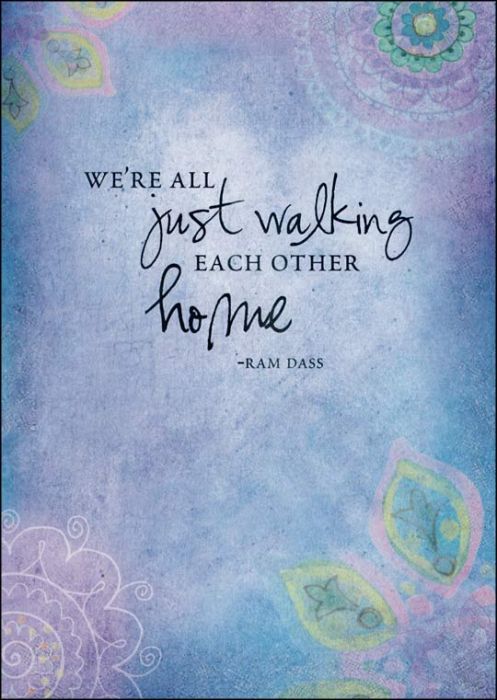
‘We’re all just walking each other home.’ Ram Dass

This quote popped up on my instagram feed and immediately I was reduced to tears.

I was transported back in time to two friends walking each other home and then back again because they didn’t want the conversation to end. I like to imagine we were talking about the lives that hung in front of us – a shimmering range of possibilities. But it’s likely we were just talking about boys. Planning our tactics as Lianne, our military commander and most successful fighter, would say with a wicked grin. We were 17. We didn’t know that one of us had already lived half her life and two dark passengers deep within her brain would soon be making their presence felt.

Meeting Lianne, being her friend and then losing her changed my life. I don’t want to imagine who I would have been without those conversations. And for six years, the conversations have been a little one-sided.

I still miss Lianne so much. When we gather together Greg, Debs and Ros, as we will this weekend for my birthday, it still feels like somebody is missing. Maybe it always will and maybe that’s OK too.

Because that is what great friends do – they change you without you even knowing how or why. They become so entangled in your life, the roots so deep you can’t tell where they begin and you end. And sometimes they go home early and you’re left walking home alone.

It is uncharacteristic. That Lianne, the person who never wanted to leave the party left first.

Losing her has made me realise how lucky I am for all my friends: my best friends who have known me the longest. The friends who have come into my life for a season. My sisters who I have fought with and loved ferociously. My counselling friends who have seen me at my most vulnerable. And my mum friends who sat with me through teething and tantrums. All of them would leave a gap, an unfillable space, if they left me to walk on alone.

It’s hit me hard this year. Part of Lianne’s legacy is that it’s really hard to cry to Backstreet Boy’s ‘Everybody’ especially when your toddler is dancing along and pointing at himself during the ‘Am I sexual?’ Somewhere I know Lianne is cackling

The thing that makes me saddest is that I will never know what Lianne would have made of the rest of her life. She had thirty years which seems so utterly brief especially as at least six years of that were blighted by brain tumours.

I know her life would have surprised me. I know it would have made me laugh. I know it would have been glorious.

It already was.

Six years ago

Five and half years ago

Five years ago

Four years ago

Three years ago